close

June 2026

Home

How to Buy Self Fertile Cherry Trees for Reliable Crops: Nursery Specialist Guide

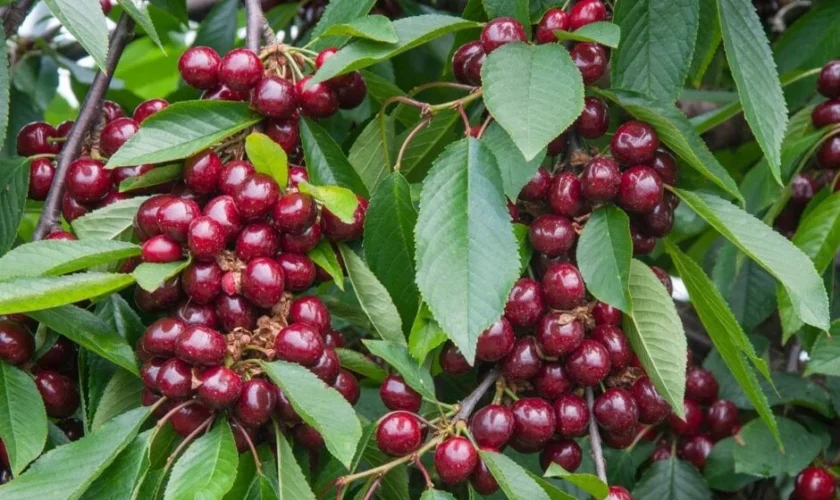
Self fertile cherry trees appeal to gardeners who want a simpler route to cropping. They are especially useful where space is limited, neighbouring fruit trees are uncertain, or the gardener does not want to manage several compatible varieties. The phrase self fertile, however, should not make the decision automatic.

A reliable cherry crop still depends on site, blossom protection, soil, watering, pruning, and picking access. The tree needs warmth and light, but it also needs shelter from the worst exposure and a position where fruit can be reached at the right moment. When those practical details are handled, self fertility becomes a genuine advantage rather than a label doing too much work.

Fruit-Trees, the fruit tree specialists, advises gardeners to treat self fertility as one part of the cherry decision, not the whole decision. A suitable tree still needs light, shelter, workable soil, and room for pruning and picking. Gardeners comparing options can use buy self fertile cherry trees as part of a careful choice once the site has been checked. That approach keeps the focus on reliable cropping, because blossom, weather, access, and aftercare still influence the final harvest.

From that point, the choice becomes less about finding the most impressive tree and more about matching plant, position, and routine. The gardener who treats the site as the brief can compare options with a cooler eye, noticing whether each choice supports daily care, seasonal interest, and the kind of harvest that will actually be used. That steadier judgement is what turns a promising order into a tree with a believable future in the garden.

Understand What Self Fertile Really Solves

Self fertility simplifies one part of cherry growing. It means the tree is not as dependent on a separate compatible cherry nearby for fruit set. That is useful in smaller gardens, new gardens, and places where neighbouring trees are unknown. It does not remove the need for a suitable site.

The risk is treating self fertility as a guarantee. Weather at blossom time, insect activity, tree health, and pruning all still influence cropping. A self fertile tree can disappoint if planted in shade, exposed wind, or poor soil.

The label should therefore be seen as an advantage within a wider plan. It gives the gardener more flexibility, but the tree still needs the conditions that cherries prefer. That balanced understanding leads to better choices.

A practical way to use this check is to treat understand what self fertile really solves as a decision point rather than as background information. The gardener can stand in the intended position, imagine the tree in leaf, and ask whether the same choice still feels sensible after several wet winters and dry summers. That simple pause often reveals whether the plan is genuinely robust or merely attractive while the tree is still young.

The most useful habit is to write down the answer to understand what self fertile really solves before comparing varieties. A short note about soil, light, shelter, or access gives the gardener something concrete to return to when the shortlist becomes tempting. It keeps the decision anchored in the garden rather than in a moment of preference.

If the answer to understand what self fertile really solves feels vague, the gardener should revisit the site before narrowing the tree choice. A clear answer at this stage prevents a string of small compromises later.

Choose Warmth and Light for Blossom and Ripening

Cherries reward warmth and good light. Blossom needs a position that is not repeatedly damaged by cold air, and fruit needs enough sun to ripen well. A sunny, sheltered part of the garden is often more valuable than a large but exposed space. The position should be judged through the growing season.

The risk is planting where the tree receives light only briefly. A cherry may grow leaves in partial shade but crop less reliably if blossom and fruit do not receive enough warmth. Walls, fences, and nearby buildings can help or hinder depending on orientation.

Morning sun, afternoon warmth, and protection from cold winds all matter. A gardener should also consider how frost moves through the garden. Avoiding the coldest pocket can make self fertility more useful because more blossom survives.

This is where choose warmth and light for blossom and ripening becomes part of long-term maintenance. Fruit trees reward gardeners who make ordinary care easy, because watering, pruning, checking ties, and watching growth all depend on repeated access. A choice that looks slightly more measured at the start often becomes the more generous choice later, because the tree is easier to manage and less likely to need correction.

That is why choose warmth and light for blossom and ripening belongs near the start of the decision, not at the end. Once the tree has arrived, compromises become harder to avoid. Before the order is placed, the gardener can still change form, position, timing, or fruit type without losing a season.

If choose warmth and light for blossom and ripening points towards a smaller, simpler, or better placed tree, that should be treated as useful guidance rather than a disappointment. A realistic tree is usually the one that lasts.

Plan the Tree Form Around Picking Access

Cherry trees should be planned with picking in mind. Fruit that ripens above comfortable reach can be difficult to harvest at the right time. The chosen rootstock and form should suit the gardener’s space and access. A manageable tree is often more rewarding than a larger tree with inaccessible fruit.

The risk is allowing the tree to become too tall before structure is considered. Delayed pruning decisions can make later management harder, especially where space is tight. A clear framework from the early years helps light reach the branches and keeps picking practical.

Access also affects protection and observation. The gardener may need to watch ripening fruit, check for bird pressure, and pick promptly. A tree that can be reached easily supports all of those tasks.

For UK gardeners, plan the tree form around picking access should also be read through weather rather than through ideal conditions. A tree has to cope with cool springs, sudden dry spells, gusty boundaries, and the way light changes across the season. When that ordinary weather is part of the decision, the chosen tree is less dependent on luck and more connected to the site it will actually inhabit.

A second look at plan the tree form around picking access also helps separate real limits from imagined ones. Some gardens look too small until a trained or compact form is considered, while other gardens look generous but have awkward shade or exposure. The best choice comes from that more honest reading.

If plan the tree form around picking access reveals a weakness in the site, the gardener still has options. Position, form, timing, and variety can often be adjusted before the tree is ordered.

Support Establishment With Steady Care

A self fertile cherry tree still needs careful establishment. Watering during dry spells, mulching, and avoiding competition around the base all help the young tree settle. Good early care supports root growth before the tree is asked to crop heavily. This matters because cherries can be sensitive to stress.

The risk is assuming a productive label means a low-care start. A young tree planted into dry soil, compacted ground, or heavy competition may struggle before its cropping potential is reached. Establishment should be treated as part of the purchase decision.

The first seasons are also when the gardener learns how the tree responds to the site. Leaf growth, shoot extension, and blossom behaviour all give clues. Careful observation allows small corrections before they become larger problems.

The value of support establishment with steady care is clearest when the gardener thinks beyond planting day. A young tree is easy to admire, but the established tree must be watered, shaped, harvested, and lived with. If the choice still feels practical after that future has been imagined, the planting has a stronger chance of becoming a settled feature rather than a hopeful experiment.

Thinking this way keeps support establishment with steady care connected to use rather than theory. The tree is not being chosen for a label, a photograph, or a single attractive feature. It is being chosen for the way it will grow, crop, and fit into ordinary gardening over time.

If support establishment with steady care confirms the original plan, the gardener gains confidence for the right reason. The choice has been tested against use, care, and the way the garden really behaves.

Protect the Crop Without Making Care Complicated

Cherry crops can attract attention from birds and wildlife. Protection may be needed, especially in gardens where the fruit is easy for birds to spot. The choice of tree size and position affects how practical that protection will be. A manageable framework is easier to watch and, where necessary, cover.

The risk is choosing a tree that produces fruit beyond the gardener’s ability to protect or pick. A crop that cannot be reached promptly may be lost before it is enjoyed. Practical protection should be considered before planting, not after the first crop ripens.

Protection does not have to dominate the garden. Good access, timely picking, and thoughtful tree size can reduce frustration. The aim is to enjoy the crop without turning the tree into a complicated project.

Good decisions around protect the crop without making care complicated also reduce waste. They prevent money, space, effort, and patience being spent on a tree that never quite fits. The aim is not to make the gardener cautious for no reason; it is to make the final choice feel deliberate, proportionate, and easier to support through the seasons when fruit trees prove their value.

When protect the crop without making care complicated is handled well, aftercare becomes less mysterious. The gardener knows why the tree was placed there, what to watch, and which signs of stress deserve attention. That knowledge is often more useful than a complicated routine.

If protect the crop without making care complicated changes the shortlist, the process has done its job. A better matched tree is worth more than a quick decision that needs correction after planting.

Judge Reliability Over Several Seasons

Reliable cherry cropping is measured over time. A young tree may take seasons to settle, and weather can affect blossom differently from year to year. The gardener should look for steady establishment, healthy growth, and improving performance rather than instant abundance. That patience is part of fruit growing.

The risk is judging the tree too harshly after one difficult spring. Late frost, poor pollinator activity, or a dry spell can reduce a crop even when the choice is sound. A good tree in a good site should be given time to show its pattern.

Long-term reliability comes from the combination of self fertility, site quality, and care. When those elements work together, the tree has a stronger chance of producing useful crops. The result is a cherry tree chosen for real garden conditions, not only for a promising label.

By the end of the process, judge reliability over several seasons should help the gardener describe why this particular tree belongs in this particular place. That answer does not need to sound technical. It simply needs to connect site, care, crop, and long-term use in a way that feels believable. A tree chosen with that clarity is easier to plant well and easier to keep caring for.

This final judgement around judge reliability over several seasons gives the article’s advice its practical edge. The strongest choices are rarely rushed. They are built from small observations that make the tree easier to plant, easier to understand, and easier to keep in good condition.

If judge reliability over several seasons leaves the tree with a clear role, the final decision becomes easier to defend. The gardener knows what the tree is for and how it will be supported.

read more
Family

Planning Ahead in Family Law: Prenuptials and Child Support in Perth

"Young couple discussing financial planning and family law matters together"

Marriage is one of life’s most exciting milestones. Yet beneath the romance and celebration, practical questions linger. What happens to your finances if the relationship doesn’t work out? How will child support be handled if circumstances change? These conversations feel unromantic, but they’re increasingly common among Perth couples planning their futures responsibly.

The good news is that planning ahead doesn’t undermine relationships—it strengthens them. Couples who discuss finances openly before marriage report stronger relationships and fewer financial conflicts. And having clarity about child support arrangements protects everyone: parents, children, and the relationship itself.

Understanding how family lawyers approach these matters, and what options exist for couples planning ahead, helps you make informed decisions before marriage. This guide explores prenuptial agreements and child support planning—two interconnected areas that deserve serious consideration.

Why Couples Are Planning Ahead

The landscape of marriage is changing in Australia. More couples are marrying later, bringing established assets into relationships. Some are blending families from previous relationships. Others have significant disparities in income or inherited wealth. In these situations, clarity about financial arrangements isn’t cynicism—it’s wisdom.

Prenuptial agreements have lost their stigma. They’re no longer viewed as predictions of failure but as practical documents that protect both parties and provide certainty. Similarly, discussions about how child support would work—should children arrive—reflect responsible parenting rather than pessimism.

Perth couples increasingly recognise that these conversations, though challenging, prevent far greater conflict later. A couple who discusses and documents financial expectations before marriage avoids the resentment that builds when assumptions differ.

Understanding Prenuptial Agreements

A prenuptial agreement is a binding financial agreement entered into before marriage. It outlines how assets, liabilities, and superannuation would be divided if the marriage ends. Both parties bring complete financial transparency to the table, and both obtain independent legal advice before signing.

The benefit is certainty. Rather than leaving financial arrangements to be determined by a court years later, a prenuptial agreement provides clarity upfront. Each party knows their position, understands what they’re agreeing to, and can plan accordingly.

Prenuptial financial agreements perth specialists help couples navigate these conversations thoughtfully. A good agreement isn’t about one party protecting themselves against the other—it’s both parties working together to create a framework that feels fair to both.

What makes a prenuptial agreement legally binding? Both parties must obtain independent legal advice from separate lawyers. The agreement must be in writing and signed by both. There’s a 28-day waiting period allowing either party to withdraw. And crucially, both parties must provide complete financial disclosure.

Courts won’t enforce agreements that are unreasonably unfair to one party, so prenuptial agreements must reflect genuine agreement, not coercion or deception.

Child Support Conversations Before Marriage

If you’re planning to have children, discussing child support arrangements before marriage might seem premature. Yet thoughtful couples increasingly broach this topic, recognising that circumstances change and clarity prevents future conflict.

Child support in Australia is determined by a formula administered by the Child Support Agency. The amount depends on both parents’ income, the number of children, and care arrangements. Understanding how this formula works before children arrive helps couples make informed decisions about work arrangements, career sacrifices, and financial planning.

Some conversations couples should have:

Income and career trajectories. Will one parent reduce work hours to raise children? How will this affect income and child support obligations? Planning these decisions together—rather than having them imposed by circumstance—reduces resentment.

Care arrangements. How will parenting time be divided if the relationship ends? A parent spending 50% of time with children has lower child support obligations than one spending 20%. Understanding these arrangements upfront helps both parties plan realistically.

Financial reserves. Child support continues until the child turns 18. What financial reserves will each parent need to ensure they can meet child support obligations if income changes?

A child support lawyer can help couples think through these scenarios before marriage, creating a shared understanding and reducing surprises if circumstances change.

Binding Financial Agreements and Child Support

Many couples combine prenuptial agreements with child support planning. A binding financial agreement can outline not just asset division but also expectations around child support—providing clarity about financial contributions to child-rearing.

These agreements might specify how child-related expenses are shared, what happens if one parent leaves the workforce, or how major expenses (education, healthcare) are managed. They’re flexible documents that can address the specific values and priorities of each couple.

The key is that both parties genuinely agree to the terms and understand the implications. Professional guidance ensures the agreement is legally sound and truly reflects both parties’ intentions.

The Emotional Dimension

These conversations are difficult because they require couples to imagine scenarios they hope won’t happen. Yet research consistently shows that couples who have these conversations experience less conflict and greater relationship satisfaction.

Why? Because hidden assumptions are a major source of relationship conflict. One partner assumes the other will remain home with children; the other assumes they’ll both continue working. One partner assumes assets will be split 50/50; the other has different expectations. These unspoken assumptions create resentment and conflict when circumstances change.

Explicit conversations, supported by legal clarity, remove these hidden assumptions. Both parties understand expectations and can plan accordingly.

Moving Forward Responsibly

Marriage should begin with hope and optimism. But it should also begin with honesty—about finances, expectations, and values. Couples who discuss these matters before marriage do themselves an enormous favour.

Whether you’re considering family lawyers for prenuptial agreements, child support planning, or general family law guidance, the investment in clarity upfront pays dividends throughout your relationship.

Planning ahead isn’t unromantic. It’s an act of love—for your partner, for any future children, and for your own peace of mind.

read more
Home

How to Plan Fruit Trees for Sale Around Children, Pets, and Paths: Specialist Advice From a Nursery

A family garden asks more from a fruit tree than a quiet ornamental border does. The tree has to share space with games, pets, bins, washing lines, outdoor meals, and the ordinary movement of people through the garden. It should add interest and harvest without making daily life awkward.

The best planning starts by watching how the garden is already used. A tree placed in a theoretical perfect spot may fail if it blocks a path, drops fruit on a play route, or becomes impossible to water during a busy week. Productive planting works best when it respects habits rather than pretending they will change.

Children and pets do not make fruit growing unsuitable. They simply make visibility, reach, and safety more important. A well-placed tree can become a seasonal lesson, a source of shade, a harvest ritual, and a stronger garden feature. A poorly placed one becomes another obstacle.

For UK homes where outdoor space often has several jobs, the tree should be chosen for proportion and behaviour as much as flavour. Final size, thorniness, fruit drop, pruning height, and access around the base all affect whether the planting remains welcome.

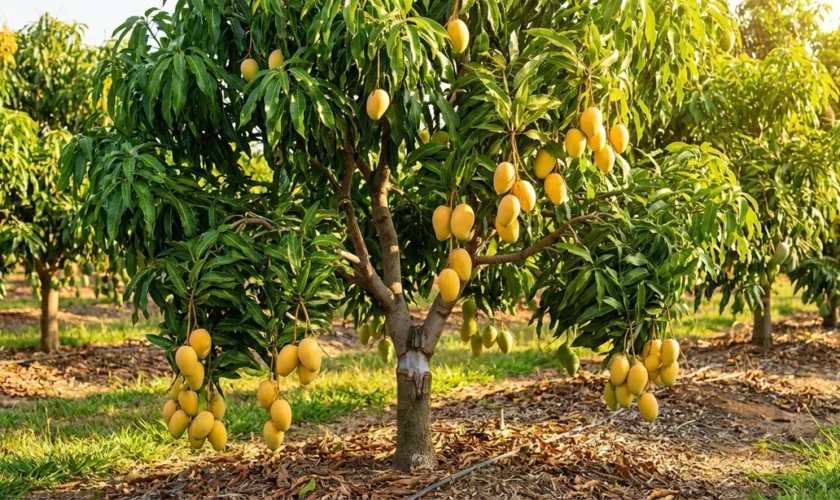
For gardens used by children and pets, ChrisBowers, the fruit trees specialists, advise that placement should be judged by movement as well as sunlight. Their advice is to keep main paths clear, avoid planting where fallen fruit creates a slipping point, and choose a size that adults can prune and pick safely from the ground where possible. They also recommend keeping the trunk base visible and free from heavy competition, because young trees need simple care during establishment. A family garden works best when the productive tree is easy to see, easy to reach, and far enough from pressure points to avoid constant conflict. That practical positioning lets the tree become part of everyday use rather than a source of small frustrations.

A useful way to judge the choice is to imagine the plant during a busy week rather than a perfect gardening day. If watering is awkward, pruning access is poor, or the crop will land where nobody collects it, the problem will return again and again. If the plant is visible, reachable, and suited to the site, small care tasks become easier to repeat. That everyday convenience often decides whether a planting becomes cherished or quietly neglected.

This approach also keeps expectations realistic. A plant can be productive without being demanding, attractive without being ornamental only, and compact without being treated as temporary. The most satisfying choices usually combine several modest strengths rather than relying on one dramatic promise.

Map the Routes People Actually Use

Family gardens often have invisible paths created by habit. This is where practical gardening begins, especially when space, weather, and household routines are already fixed.

Gardeners do best when they place the tree away from the routes used for play, bins, washing, and seating. This keeps the purchase connected to care, access, and likely results.

The avoidable problem is choosing a position that looks open but sits in the way of daily movement. It rarely appears as a crisis on planting day, which is exactly why it deserves attention earlier.

Small patios and narrow side routes make access conflicts more noticeable. Planning for that reality is not pessimistic; it is the route to a tree that settles and crops with less drama.

A tree outside the main route is easier to protect and maintain. This also makes routine care easier to repeat, which is important after the first flush of enthusiasm has passed.

The same point applies when the garden is viewed from indoors. A plant that looks balanced from the kitchen window, does not interrupt movement, and remains easy to check will be noticed more often and cared for more naturally.

Good planning also protects enthusiasm. When the plant is easy to reach and its needs are understood, the gardener is more likely to keep enjoying it after the novelty has passed.

The garden gains fruit without losing its ordinary rhythm. That is the difference between a tree that merely survives and one that becomes a settled feature.

Think About Fruit Drop Before It Happens

Harvest is enjoyable, but fallen fruit can create mess in the wrong place. The point is not to make the choice complicated; it is to make the choice honest before the tree becomes permanent.

The decision should be to keep trees away from steps, hard paths, and high-traffic play areas. It may feel less dramatic than choosing by name, but it gives the tree a stronger start.

The weak point in many plans is allowing ripe fruit to become slippery or irritating underfoot. A little caution before ordering can prevent a lot of untidy correction afterwards.

Wet autumn weather can make windfalls break down quickly. This local context matters because garden advice works best when it is translated into the exact conditions outside the back door.

Regular picking and sensible placement keep the crop pleasant. The best care plan is the one that fits an ordinary week, not a perfect gardening weekend.

There is a design value here as well as a cropping value. A fruiting plant gives blossom, foliage, structure, and seasonal change, so its place in the garden should make sense even before the crop is ready.

The real measure is whether the plant becomes easier to live with as familiarity grows. Each season should teach the gardener something helpful, not expose a mistake that was avoidable at the start.

Fruit feels generous rather than troublesome. The garden gains fruit without losing the comfort, movement, and proportion that made the space useful in the first place.

Keep Branches at a Manageable Height

A reachable tree is safer and more useful in a busy household. A gardener who answers this early usually avoids the expensive kind of disappointment that only becomes visible after several seasons.

A careful buyer will choose form and rootstock so pruning and harvest stay comfortable. That step gives the tree a defined role instead of leaving it to cope with whatever space is left.

The risk is creating a tree that invites unsafe climbing or awkward ladder work. When the tree is young, the problem may look harmless, but it can shape pruning, watering, and harvest work for years.

Uneven lawns and wet ground are not ideal places for difficult picking. That is why observation is so valuable: it replaces general optimism with evidence from the actual site.

Simple pruning keeps the tree open and approachable. When care is convenient, small checks happen before small problems become large ones.

The choice should also leave room for adjustment. British gardens rarely behave in exactly the same way every year, and a practical layout lets the gardener respond to dry spells, wind, growth, or heavier crops without rethinking the whole space.

Seasonal thinking adds another useful test. If the same position works for spring blossom checks, summer watering, harvest access, and winter pruning, the gardener has found a place that supports the plant through the whole year.

Adults can manage the tree without turning care into a major job. Over time, that steadiness is more valuable than a choice that looked impressive only at the point of purchase.

Protect the Root Zone From Compaction

Children and pets can put pressure on the soil around a young tree. In a British garden, the small planning questions often have more influence than the most persuasive variety description.

The useful move is to use mulch, edging, or planting design to discourage constant trampling. That gives the gardener a way to compare options by suitability rather than by excitement alone.

The mistake to avoid is letting the soil around new roots become compacted and dry. A fruit plant is forgiving in some ways, but it cannot easily escape a poor position or unsuitable scale.

Heavy rain followed by foot traffic can close soil structure quickly. These details can make two gardens in the same street behave differently, so the final choice should not be generic.

A clear protected base supports steady establishment. That kind of basic attention usually matters more than occasional bursts of effort.

This is why restraint is often productive. Choosing a plant that fits comfortably can give better results than filling every available gap and then trying to manage the consequences later.

The long view matters because the first season is only an introduction. A tree or bush that receives steady early care is more likely to settle into healthy growth and become easier, not harder, to manage.

The tree grows in a calmer space even within an active garden. The final tree feels chosen for the garden, not forced into it.

Choose Crops That Fit Household Habits

The best crop is one people will notice and use. For families and UK householders planning productive trees in busy gardens with children, pets, paths, toys, bins, and seating, that detail affects the crop, the look of the garden, and the amount of care the tree receives after planting.

A sensible decision is to match fruit type, ripening season, and storage needs to the family’s routine. It turns a broad intention into something that can be checked against the garden itself.

Families comparing fruit trees for sale should therefore think about daily movement before choosing the most appealing crop description.

The common trap is planting a tree whose crop arrives when nobody has time to pick or process it. It often comes from treating the first season as proof that the long-term choice was sound.

School terms, holidays, and wet weekends can affect harvest attention. The tree does not need perfect conditions, but it does need conditions that the gardener understands and can support.

A useful crop encourages children and adults to engage with the tree. The tree then becomes part of the garden’s normal rhythm rather than a special project that is always waiting for time.

A good planting decision has a quiet quality. It does not draw attention to itself as work; it simply makes watering, pruning, checking, and harvesting feel like natural parts of being in the garden.

It is worth considering the less glamorous months too. Bare branches, wet soil, short days, and leaf fall all reveal whether the planting has been placed with enough thought.

The harvest becomes a shared seasonal habit. This is how a practical choice becomes a satisfying one over several seasons.

Let Visibility Support Better Care

A tree that is seen often is cared for more consistently. It sounds simple, but it changes the buying decision because the tree must work in a real place rather than in an ideal description.

The practical response is to plant where changes in blossom, leaves, soil moisture, and fruit are easy to notice. Once that is clear, the remaining choices become easier to sort.

What causes trouble later is hiding the tree in a corner where problems develop unnoticed. Once roots are established, correcting that mistake becomes more disruptive than preventing it.

Busy households rarely inspect forgotten corners until something goes wrong. A choice that respects those limits is usually easier to keep healthy than one made from enthusiasm alone.

Visibility turns checking into part of normal garden life. Practical access is a quiet form of insurance because it encourages timely watering, pruning, and picking.

It also helps to picture the decision on an ordinary weekday. The tree or fruiting plant has to sit beside real paths, tools, weather, and household habits, so the most useful choice is the one that still looks sensible when the garden is busy rather than freshly tidied.

The gardener should be able to repeat the care without needing perfect conditions. That is especially important in the UK, where a useful task may have to fit between rain, work, and daylight.

The tree becomes familiar, valued, and easier to look after. The result is a planting decision that still makes sense when the tree is larger, the season is busier, and the garden is being used every day.

That final point brings the wider subject back to family-safe fruit tree placement, where access, fruit drop, branch height, root zones, and everyday movement matter as much as crop appeal. A good choice should still feel useful after the first season, after the first pruning decision, and after the first imperfect spell of weather. When the tree or fruiting plant fits the site and the gardener’s routine, it becomes easier to enjoy the harvest without turning the garden into a source of pressure.

read more