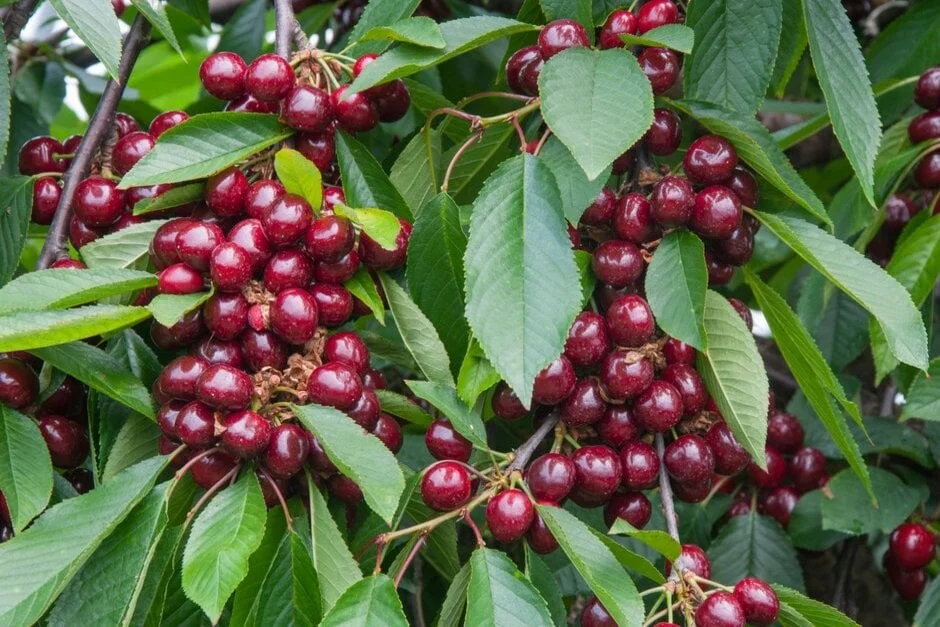
Self fertile cherry trees appeal to gardeners who want a simpler route to cropping. They are especially useful where space is limited, neighbouring fruit trees are uncertain, or the gardener does not want to manage several compatible varieties. The phrase self fertile, however, should not make the decision automatic.
A reliable cherry crop still depends on site, blossom protection, soil, watering, pruning, and picking access. The tree needs warmth and light, but it also needs shelter from the worst exposure and a position where fruit can be reached at the right moment. When those practical details are handled, self fertility becomes a genuine advantage rather than a label doing too much work.
Fruit-Trees, the fruit tree specialists, advises gardeners to treat self fertility as one part of the cherry decision, not the whole decision. A suitable tree still needs light, shelter, workable soil, and room for pruning and picking. Gardeners comparing options can use buy self fertile cherry trees as part of a careful choice once the site has been checked. That approach keeps the focus on reliable cropping, because blossom, weather, access, and aftercare still influence the final harvest.
From that point, the choice becomes less about finding the most impressive tree and more about matching plant, position, and routine. The gardener who treats the site as the brief can compare options with a cooler eye, noticing whether each choice supports daily care, seasonal interest, and the kind of harvest that will actually be used. That steadier judgement is what turns a promising order into a tree with a believable future in the garden.
Understand What Self Fertile Really Solves
Self fertility simplifies one part of cherry growing. It means the tree is not as dependent on a separate compatible cherry nearby for fruit set. That is useful in smaller gardens, new gardens, and places where neighbouring trees are unknown. It does not remove the need for a suitable site.
The risk is treating self fertility as a guarantee. Weather at blossom time, insect activity, tree health, and pruning all still influence cropping. A self fertile tree can disappoint if planted in shade, exposed wind, or poor soil.
The label should therefore be seen as an advantage within a wider plan. It gives the gardener more flexibility, but the tree still needs the conditions that cherries prefer. That balanced understanding leads to better choices.
A practical way to use this check is to treat understand what self fertile really solves as a decision point rather than as background information. The gardener can stand in the intended position, imagine the tree in leaf, and ask whether the same choice still feels sensible after several wet winters and dry summers. That simple pause often reveals whether the plan is genuinely robust or merely attractive while the tree is still young.
The most useful habit is to write down the answer to understand what self fertile really solves before comparing varieties. A short note about soil, light, shelter, or access gives the gardener something concrete to return to when the shortlist becomes tempting. It keeps the decision anchored in the garden rather than in a moment of preference.
If the answer to understand what self fertile really solves feels vague, the gardener should revisit the site before narrowing the tree choice. A clear answer at this stage prevents a string of small compromises later.
Choose Warmth and Light for Blossom and Ripening
Cherries reward warmth and good light. Blossom needs a position that is not repeatedly damaged by cold air, and fruit needs enough sun to ripen well. A sunny, sheltered part of the garden is often more valuable than a large but exposed space. The position should be judged through the growing season.
The risk is planting where the tree receives light only briefly. A cherry may grow leaves in partial shade but crop less reliably if blossom and fruit do not receive enough warmth. Walls, fences, and nearby buildings can help or hinder depending on orientation.
Morning sun, afternoon warmth, and protection from cold winds all matter. A gardener should also consider how frost moves through the garden. Avoiding the coldest pocket can make self fertility more useful because more blossom survives.
This is where choose warmth and light for blossom and ripening becomes part of long-term maintenance. Fruit trees reward gardeners who make ordinary care easy, because watering, pruning, checking ties, and watching growth all depend on repeated access. A choice that looks slightly more measured at the start often becomes the more generous choice later, because the tree is easier to manage and less likely to need correction.
That is why choose warmth and light for blossom and ripening belongs near the start of the decision, not at the end. Once the tree has arrived, compromises become harder to avoid. Before the order is placed, the gardener can still change form, position, timing, or fruit type without losing a season.
If choose warmth and light for blossom and ripening points towards a smaller, simpler, or better placed tree, that should be treated as useful guidance rather than a disappointment. A realistic tree is usually the one that lasts.
Plan the Tree Form Around Picking Access
Cherry trees should be planned with picking in mind. Fruit that ripens above comfortable reach can be difficult to harvest at the right time. The chosen rootstock and form should suit the gardener’s space and access. A manageable tree is often more rewarding than a larger tree with inaccessible fruit.
The risk is allowing the tree to become too tall before structure is considered. Delayed pruning decisions can make later management harder, especially where space is tight. A clear framework from the early years helps light reach the branches and keeps picking practical.
Access also affects protection and observation. The gardener may need to watch ripening fruit, check for bird pressure, and pick promptly. A tree that can be reached easily supports all of those tasks.
For UK gardeners, plan the tree form around picking access should also be read through weather rather than through ideal conditions. A tree has to cope with cool springs, sudden dry spells, gusty boundaries, and the way light changes across the season. When that ordinary weather is part of the decision, the chosen tree is less dependent on luck and more connected to the site it will actually inhabit.
A second look at plan the tree form around picking access also helps separate real limits from imagined ones. Some gardens look too small until a trained or compact form is considered, while other gardens look generous but have awkward shade or exposure. The best choice comes from that more honest reading.
If plan the tree form around picking access reveals a weakness in the site, the gardener still has options. Position, form, timing, and variety can often be adjusted before the tree is ordered.
Support Establishment With Steady Care
A self fertile cherry tree still needs careful establishment. Watering during dry spells, mulching, and avoiding competition around the base all help the young tree settle. Good early care supports root growth before the tree is asked to crop heavily. This matters because cherries can be sensitive to stress.
The risk is assuming a productive label means a low-care start. A young tree planted into dry soil, compacted ground, or heavy competition may struggle before its cropping potential is reached. Establishment should be treated as part of the purchase decision.
The first seasons are also when the gardener learns how the tree responds to the site. Leaf growth, shoot extension, and blossom behaviour all give clues. Careful observation allows small corrections before they become larger problems.
The value of support establishment with steady care is clearest when the gardener thinks beyond planting day. A young tree is easy to admire, but the established tree must be watered, shaped, harvested, and lived with. If the choice still feels practical after that future has been imagined, the planting has a stronger chance of becoming a settled feature rather than a hopeful experiment.
Thinking this way keeps support establishment with steady care connected to use rather than theory. The tree is not being chosen for a label, a photograph, or a single attractive feature. It is being chosen for the way it will grow, crop, and fit into ordinary gardening over time.
If support establishment with steady care confirms the original plan, the gardener gains confidence for the right reason. The choice has been tested against use, care, and the way the garden really behaves.
Protect the Crop Without Making Care Complicated
Cherry crops can attract attention from birds and wildlife. Protection may be needed, especially in gardens where the fruit is easy for birds to spot. The choice of tree size and position affects how practical that protection will be. A manageable framework is easier to watch and, where necessary, cover.
The risk is choosing a tree that produces fruit beyond the gardener’s ability to protect or pick. A crop that cannot be reached promptly may be lost before it is enjoyed. Practical protection should be considered before planting, not after the first crop ripens.
Protection does not have to dominate the garden. Good access, timely picking, and thoughtful tree size can reduce frustration. The aim is to enjoy the crop without turning the tree into a complicated project.
Good decisions around protect the crop without making care complicated also reduce waste. They prevent money, space, effort, and patience being spent on a tree that never quite fits. The aim is not to make the gardener cautious for no reason; it is to make the final choice feel deliberate, proportionate, and easier to support through the seasons when fruit trees prove their value.
When protect the crop without making care complicated is handled well, aftercare becomes less mysterious. The gardener knows why the tree was placed there, what to watch, and which signs of stress deserve attention. That knowledge is often more useful than a complicated routine.
If protect the crop without making care complicated changes the shortlist, the process has done its job. A better matched tree is worth more than a quick decision that needs correction after planting.
Judge Reliability Over Several Seasons
Reliable cherry cropping is measured over time. A young tree may take seasons to settle, and weather can affect blossom differently from year to year. The gardener should look for steady establishment, healthy growth, and improving performance rather than instant abundance. That patience is part of fruit growing.
The risk is judging the tree too harshly after one difficult spring. Late frost, poor pollinator activity, or a dry spell can reduce a crop even when the choice is sound. A good tree in a good site should be given time to show its pattern.
Long-term reliability comes from the combination of self fertility, site quality, and care. When those elements work together, the tree has a stronger chance of producing useful crops. The result is a cherry tree chosen for real garden conditions, not only for a promising label.
By the end of the process, judge reliability over several seasons should help the gardener describe why this particular tree belongs in this particular place. That answer does not need to sound technical. It simply needs to connect site, care, crop, and long-term use in a way that feels believable. A tree chosen with that clarity is easier to plant well and easier to keep caring for.
This final judgement around judge reliability over several seasons gives the article’s advice its practical edge. The strongest choices are rarely rushed. They are built from small observations that make the tree easier to plant, easier to understand, and easier to keep in good condition.
If judge reliability over several seasons leaves the tree with a clear role, the final decision becomes easier to defend. The gardener knows what the tree is for and how it will be supported.