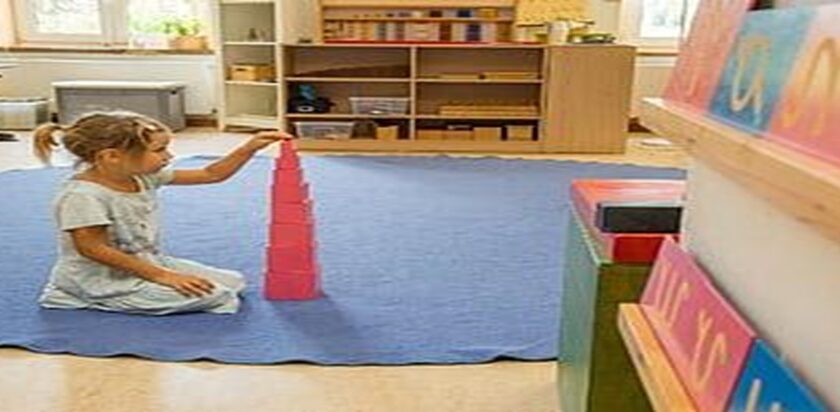
The Montessori Pink Tower is one of the most iconic and recognizable Montessori materials. If you’ve ever walked into a Montessori classroom, chances are you’ve seen it—ten pink wooden cubes stacked neatly from largest to smallest. But this material isn’t just about making a tower.
It’s designed to help young children refine their senses, build concentration, and develop an early foundation for mathematics and spatial awareness.
As more parents begin to bring Montessori-inspired learning into their homes, knowing how to properly present the Pink Tower has become increasingly important. A correct presentation ensures that children don’t just see it as a toy but experience it as a learning tool that nurtures independence and discovery.
At Dannico Woodworks, we believe that quality materials and thoughtful presentation go hand in hand.
That’s why we craft durable, child-friendly furniture that supports hands-on learning experiences like the Pink Tower.
If you’re a parent or educator looking to guide a child through this exercise, this step-by-step guide will walk you through exactly how to do it.
What Is the Montessori Pink Tower?
The Pink Tower is a set of ten wooden cubes, painted a uniform shade of pink, ranging from 1 cm³ to 10 cm³.
The simplicity of the material is intentional—it removes distractions like multiple colors or designs so that children can focus entirely on size and dimension.
Dr. Maria Montessori designed the Pink Tower to:
- Develop visual discrimination of size
- Refine hand-eye coordination and fine motor skills
- Encourage concentration and order
- Lay the groundwork for mathematics concepts such as volume, comparison, and sequencing
By working with the Pink Tower, children are not just stacking cubes. They are learning how to compare, categorize, and think critically—all through play.
Preparing for the Presentation
Before you introduce the Pink Tower to a child, set up the environment thoughtfully. Montessori emphasizes order and simplicity, so preparation is key.
- Choose the right space – Ideally, use a child-sized mat or a low table in a quiet, uncluttered area. This helps the child focus on the material without distractions.
- Demonstrate respect for the material – The way you handle the Pink Tower shows the child how to treat it. Move slowly and with care.
- Invite the child – In Montessori practice, we don’t command. Instead, we invite. A simple, “Would you like me to show you something interesting?” works beautifully.
Step-by-Step: How To Present the Pink Tower
Here’s a practical walkthrough you can use at home or in the classroom.
Step 1: Bring the Cubes to the Mat
- Carry the cubes one at a time from the shelf to the mat.
- Start with the largest cube and continue in order until all ten are on the mat.
- Place them randomly rather than in sequence—this will give the child the chance to sort and compare.
Step 2: Introduce the Tower
- Without speaking too much, begin stacking the cubes from largest to smallest.
- Use two hands for each cube and place them carefully in the center of the cube beneath.
- Continue until you’ve built the full tower.
Step 3: Pause and Observe
- Step back and let the child take in the completed tower.
- You may trace the edges of the tower with your finger to highlight the visual impression of size.
Step 4: Invite the Child to Try
- Disassemble the tower cube by cube.
- Place the cubes randomly on the mat again.
- Gently invite the child: “Would you like to try?”
- Step aside and let them build it themselves, offering help only if needed.
Step 5: Repeat and Explore
- Children often want to repeat the activity several times.
- Allow them to experiment—some may build horizontally or explore in other creative ways. This is still valuable learning.
Extensions and Variations
Once a child is comfortable with the Pink Tower, you can introduce variations that deepen the learning experience:
- Mix with the Brown Stair – Children can explore the relationship between width and height.
- Pattern Building – Encourage alternating patterns (for example, Pink Tower cube with a Brown Stair prism).
- Grading Exercises – Ask the child to line up the cubes from biggest to smallest instead of stacking.
- Blindfolded Play – Older children can feel the cubes and try to identify size differences by touch.
These variations keep the activity fresh while reinforcing key concepts of size, order, and dimension.
Why the Pink Tower Matters at Home
For many parents, Montessori materials can seem like “classroom-only” tools, but the Pink Tower works beautifully at home too. Here’s why:
- Builds focus: Children learn to concentrate on one activity at a time.
- Encourages independence: They learn to carry, stack, and organize on their own.
- Enhances problem-solving: Misplacing one cube disrupts the entire tower, teaching cause and effect naturally.
- Prepares for math: Concepts like sequencing and comparison form the foundation for later academic learning.
At Dannico Woodworks, we’ve seen how the right environment makes all the difference. A sturdy child-sized table, shelves at their height, and functional furniture help children explore materials like the Pink Tower with confidence.
FAQs
What age is the Pink Tower for?
Typically, children between 2.5 and 4 years old work with the Pink Tower, though older children may still enjoy variations and extensions.
Do I need a mat to present it?
While not strictly required, a floor mat helps define the child’s workspace and creates a sense of order.
How often should my child use the Pink Tower?
There’s no set schedule. Children are naturally drawn to repeat activities they enjoy, so allow them to use it as often as they like.
What if my child stacks it incorrectly?
Resist the urge to correct right away. The design of the cubes makes errors obvious to the child. With practice, they usually self-correct.
Can I make my own Pink Tower at home?
You can, but precision in size is crucial for the learning benefits. Purchasing a professionally made set ensures accuracy.
Conclusion
Presenting the Montessori Pink Tower isn’t complicated, but it does require patience, care, and respect for the child’s learning process.
When introduced thoughtfully, it becomes much more than a stack of blocks—it’s a tool that strengthens concentration, independence, and early problem-solving skills.
At Dannico Woodworks, we believe children thrive when given the right environment. Our handcrafted furniture is designed to support activities like the Pink Tower, giving kids the freedom to learn, explore, and grow safely.
Have you tried presenting the Pink Tower at home or in the classroom? What insights did you notice from your child’s experience?